

Your Routine
Your Routine
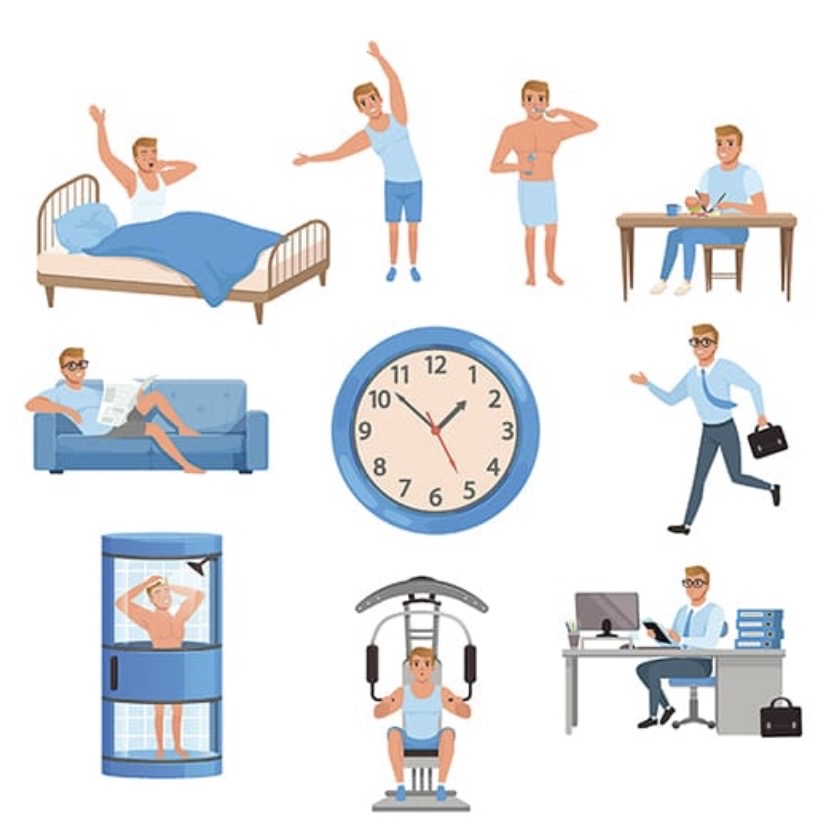
Do you have a routine?
You know, a usual way of doing daily tasks in a specific order, such as morning hygiene or exercise.
I know I do, morning, noon and night. So many rituals backed by the fear or guilt of not doing them.
I wonder, however, are they really as healthy as they are cracked up to be?
For instance, in my running days, I always had pre race rituals, eg, bathroom breaks, warm ups, cups of coffee, but, once, the car broke down on the way to a race and we got there with minutes to spare, with no time for my pre race routine and, glory be and inexplicably, I ran the best race of my life!!!
Come to think of it, drafting this weekly Friday With Fred blog, for over 20 years, is part of my routine.
Comments
Routines keep us sane,…
Routines keep us sane, regardless if they do any other good or not.
How does one define sane?
How does one define sane?
Absolutely. Not the same…
Absolutely. Not the same every day but each day has it's routine.
Like running?
Like running?
Routines keep us from over…
Routines keep us from over thinking
Not one of my problems :)
Not one of my problems :)
Via ChatGBTBreaking out of…
Via ChatGBT
Breaking out of your routine every now and then can make life feel fresher, more interesting, and even more meaningful. Doing something new wakes up your brain, sparks creativity, lifts your mood, and helps keep you from going through life on autopilot. New experiences also create memorable moments, strengthen relationships, and can reveal interests or possibilities you never knew you had. You don’t have to turn your life upside down—just take a different route, try something you’ve never done, go somewhere new, or say yes to an unexpected opportunity. Keep the routines that give your life stability, but make room for a little unpredictability; sometimes, getting off the familiar path is exactly what makes life feel exciting again.
You might like the full,…
You might like the full, unsummarized answer.
Breaking your routine from time to time can be surprisingly good for your brain, mood, relationships, and even your sense of purpose. Routine is useful—it reduces decision-making and creates stability—but too much of it can make life feel like you’re on autopilot.
Here are some of the biggest benefits:
🧠 1. It stimulates your brain
Doing something differently forces your brain to pay attention rather than relying on automatic habits. New experiences create more mental engagement and can improve learning, creativity, and problem-solving.
Even small changes—taking a different route, eating somewhere new, learning a new skill—can have this effect.
💡 2. It can increase creativity
Novel experiences give your brain new information to connect. That’s one reason people sometimes have good ideas when they’re traveling, walking somewhere unfamiliar, or doing something outside their normal environment.
A little disruption can produce new perspectives.
😊 3. It can improve your mood
Predictability is comforting, but excessive sameness can contribute to boredom. Doing something unexpected can create anticipation, excitement, and a sense of novelty.
You don’t necessarily need a big vacation. An unplanned lunch, spontaneous drive, new restaurant, or afternoon doing something you’ve never tried can provide a psychological reset.
⏳ 4. It can make time feel less like it’s flying by
This is an interesting one.
When days are highly repetitive, your brain tends to encode fewer distinct memories. Looking back, an entire month of similar days can seem to have disappeared.
Novel experiences create memory landmarks, making periods of your life feel richer and more substantial in retrospect.
🧭 5. It helps prevent “autopilot”
Routines can become so automatic that you stop consciously evaluating whether they’re still serving you.
Breaking them occasionally gives you a chance to ask:
“Do I actually enjoy doing this, or do I just always do it?”
That can be particularly valuable during major life transitions.
💪 6. It builds adaptability
When you deliberately become comfortable with being uncomfortable or uncertain, unexpected changes become less disruptive.
You’re essentially practicing:
“I can handle things being different.”
That can make you more resilient when circumstances change outside your control.
👥 7. It can strengthen relationships
Couples and friends can fall into routines just as individuals do. Trying something unfamiliar together creates shared experiences and gives you something new to talk about.
In long-term relationships, novelty can be particularly valuable because it counteracts the tendency for interactions to become predictable.
🌱 8. It can help you discover things about yourself
You may discover that you love something you never would have chosen as part of your normal routine—or that something you’ve been doing for years isn’t particularly important to you.
That’s one of the underrated benefits of experimentation: you learn what you actually like.
The key is
controlled disruption
You don’t want to eliminate routine. Routine provides stability, saves time, and makes good habits easier to maintain.
A good approach is:
Keep the important routines; periodically disrupt the unimportant ones.
For example, keep your exercise, sleep, financial, and other productive habits consistent—but deliberately change where you go, what you do, who you spend time with, what you learn, or how you spend an afternoon.
A useful rule might be:
Don’t make your life chaotic. Just make it occasionally surprising.
That can give you many of the psychological benefits of novelty without sacrificing the benefits of a stable routine.
Right on Paul!
Right on Paul!
Agree
Agree
Longest and best comment…
Longest and best comment ever! You get it!
My view involves routines…
My view involves routines providing a baseline but not a requirement as I adjust as needed and/or desired best expounded by Paul’s erudite comments.
Requirement is the problem!
Requirement is the problem!
If you are second guessing a…
If you are second guessing a routine, then you have to ask yourself if you are doing that because you are genuinely unhappy with the routine and/or you simply have a desire to shake it up for fun OR because you THINK you should be unhappy with the routine (for instance, because instagram tells you that you should be unhappy with your routine - and wants to sell you something to fix it :D).
Routines are instilled on us from our very first breath. It's not a surprise that we then continue being creatures of habit for the rest of our lives.
And with that, back to my daily routine. Happily. :)
Good one :)
Good one :)
I do a comedy routine every…
I do a comedy routine every Friday at the Gotham Happy Hour
Very routine
Very routine
Add new comment